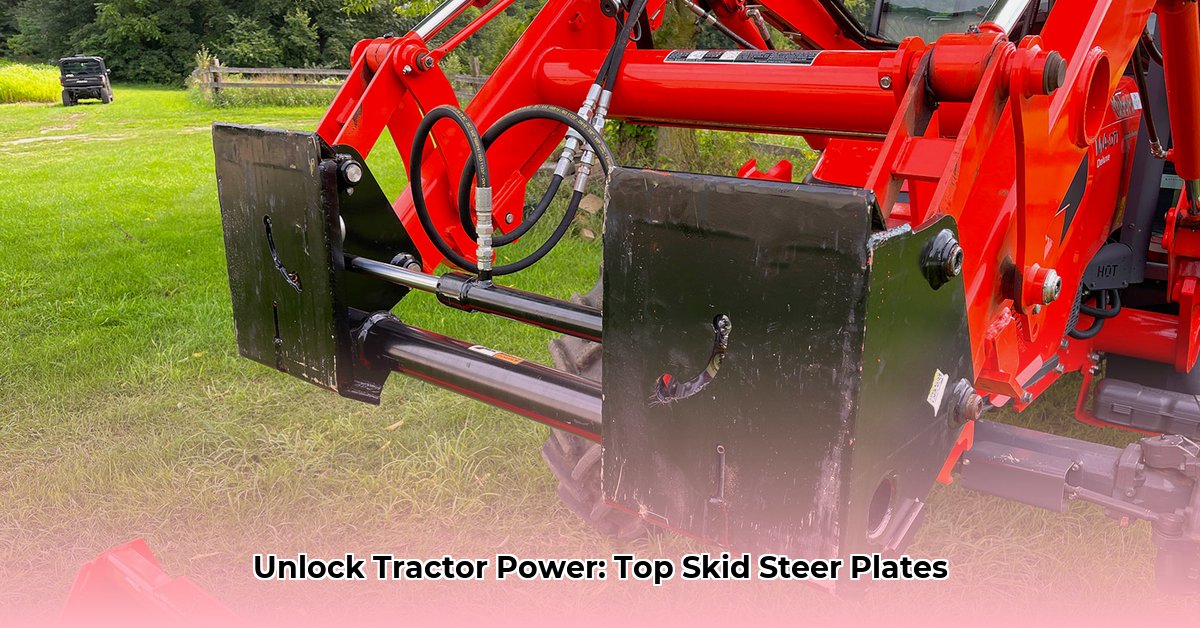
Selecting the Right Skid Steer Attachment Plate: A Step-by-Step Guide
Adding a skid steer attachment plate to your tractor significantly boosts efficiency. But choosing the right one is crucial for safety and performance. This guide provides a step-by-step approach to selecting, installing, and maintaining these vital tools, maximizing their benefit for your farm. Have you ever considered the long-term cost savings of a high-quality plate? It's a significant factor in overall ROI. For more on tractor equipment, check out this helpful resource.
1. Compatibility: Ensuring a Perfect Fit
Before purchasing, consult your tractor's owner's manual to identify the hitch type and dimensions. The attachment plate must be perfectly compatible with your specific tractor model. Incorrect compatibility can lead to equipment damage and safety hazards. Think of it like trying to force a square peg into a round hole – it simply won't work. A proper fit is non-negotiable. Are you confident your current tractor is compatible with the plates you're considering?
2. Weight Capacity: Avoiding Overburdening
The attachment plate's weight capacity must exceed the combined weight of the plate and the heaviest attachment you'll use. It's always safer to overestimate. Ignoring this can cause catastrophic equipment failure or even injury. "Always err on the side of caution when determining weight capacity," advises Dr. Sarah Miller, Agricultural Engineering Professor at Purdue University. What safety margin do you typically incorporate when calculating weight capacity for your farm equipment?
3. Materials: Strength, Durability, and Longevity
Heavy-duty steel is a common material, offering strength and affordability. However, steel is susceptible to rust, particularly in humid environments. Consider plates with protective coatings like zinc or powder coating to enhance corrosion resistance and extend the plate's lifespan. "Investing in a coated plate is a small price to pay for long-term durability and reduced replacement costs," notes Mark Johnson, owner of Johnson's Farm Equipment. Do you prioritize material strength over initial cost savings when selecting attachment plates?
Here's a comparison of common materials:
| Material | Pros | Cons |
|---|---|---|
| Heavy-Duty Steel | Strong, readily available, relatively inexpensive | Prone to rust without coating, can be heavy |
| High-Strength Steel w/ Coating | Superior strength, corrosion resistance, extended lifespan | More expensive |
| Aluminum Alloys | Lighter weight (improved maneuverability), corrosion resistance (some) | Potentially less strong than steel, may be more expensive than steel |
4. Attachment Mechanisms: Speed and Ease of Use
Quick-attach mechanisms are highly desirable, simplifying tool changes. Lever-operated systems are often tool-free, significantly improving efficiency. While more complex systems might offer increased durability, they may compromise ease of use. What factors do you weigh most heavily when selecting attachment mechanisms?
5. Installation and Safe Usage
Always follow the manufacturer's instructions precisely. Safety is paramount.
Step-by-Step Installation:
- Secure Attachment: Carefully attach the plate to your tractor's hitch, ensuring a tight and secure fit. Double-check for any wobble or looseness.
- Stability Check: Verify the stability of the entire setup before attaching any implements.
- Implement Connection: Carefully connect your chosen implement, again ensuring a secure and stable connection.
6. Maintenance and Troubleshooting
Regular maintenance extends the life of your attachment plate.
- Regular Inspections: Check for damage, corrosion, and loose bolts. A simple visual inspection before each use can prevent more costly repairs.
- Cleaning and Lubrication: Keep the plate clean and lubricate moving parts to ensure smooth operation and prevent wear.
- Protection from the Elements: When not in use, store the plate in a dry, covered area to minimize corrosion.
Addressing issues promptly prevents small problems from escalating into major failures. Have you ever experienced a major equipment failure due to inadequate maintenance?
Maximizing Your Return on Investment (ROI)
While there's an initial cost, the increased efficiency translates to significant long-term savings. A versatile plate expands your tractor's capabilities, directly impacting your farm's productivity and profitability. Proper maintenance further enhances its lifespan, ensuring a strong return on your investment. Consider the long-term benefits – a well-chosen and maintained skid steer attachment plate is an investment that pays off for years to come.